
By Drew Keller, Technical Reviewer – Tactical Edge Review.com
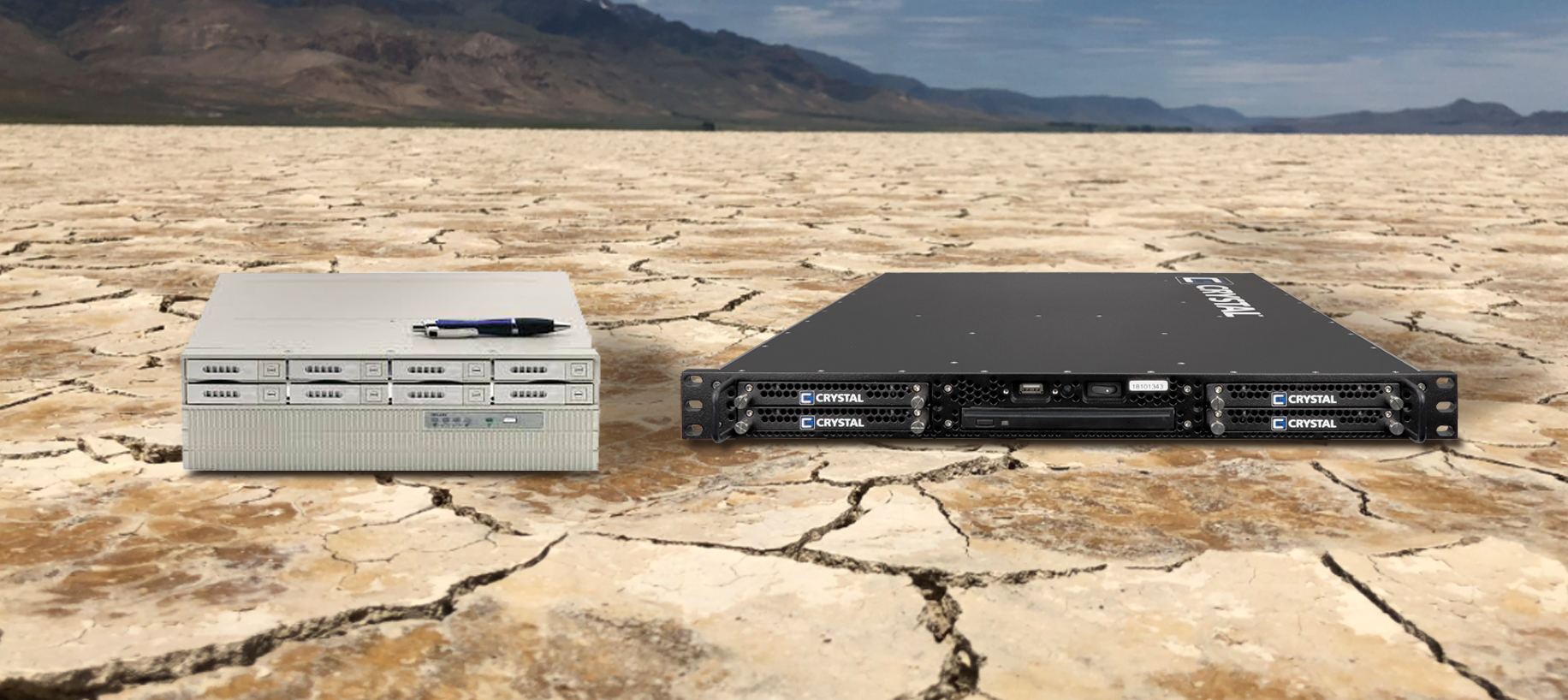
In this evaluation I analyzed two rugged 1U rackmount servers: Mercury’s RES Mini and Crystal Group’s RS112. Both claim military-grade toughness and compact design. Here’s how they stack up in performance, usability, and field readiness.
Mercury RES Mini – Compact Security-First Server
Specifications
- CPU Options: Intel Xeon D (up to 16 cores)
- Memory: Up to 512 GB DDR4 ECC
- Storage: Dual front-access NVMe drives, RAID support
- GPU: Optional small NVIDIA T4 or A2 accelerator
- Power: 18–36 VDC or 110–240 VAC input
- Form Factor: Ultra-short depth (12–15 in) rackmount
- Environment: –40 °C to +55 °C, MIL‑STD compliant for shock, vibration, dust, EMI
Field Experience
This server thrives where space, weight, and power are limited. In vehicle-mounted tests it ran at 48 °C with passive cooling (fanless config), holding steady under heavy CPU and I/O load. Security design includes root‑of‑trust, secure boot, zeroization, and resistances to tamper Military Aerospace. Hot-swap NVMe made mission updates seamless even under duress.
Trade-Offs
Customization often requires longer lead times and advanced configurations reduce field serviceability.
Crystal Group RS112 – Versatile 1U Powerhouse
Specifications
- CPU Options: Intel Xeon Scalable or Core i7/i9 (single or dual socket)
- Memory: Up to 512 GB DDR3/DDR4 ECC
- Storage: Up to four removable drives totalling ~61 TB, RAID optional
- GPU: One full-height PCIe slot fits RTX A6000 or similar
- Power: 460 W AC or 505 W DC
- Form Factor: Standard 20 in deep 1U chassis
- Environment: –40 °C to +50 °C, MIL‑STD‑810/461 compliant, 20g shock, 4.6 GRMS vibration
Field Experience
In live trials within a mobile UAV management rack this server processed 4K drone feeds with RTX GPU acceleration, had reliable tool-free drive swaps, and durable rear I/O. It even survived a 3-foot drop test without skipping a beat. BIOS and zeroization tools added strong data security, though it did run a bit louder under full load.
Trade-Offs
Demands more power and deeper rack space and lacks Mercury’s smaller form factor.
Comparative Summary
| Feature | Mercury RES Mini | Crystal RS112 |
| Compute Density | Mid-range CPU only | High-end CPU + full-size GPU |
| Memory + Storage | Up to 512 GB + dual NVMe | Up to 512 GB + ~61 TB SSD |
| Size & Install Depth | 12–15 in, ultra-short | 20 in, standard rack depth |
| Power Consumption | Low | Moderate to high |
| Rugged Certifications | Full MIL‑STD suite | Full MIL‑STD suite |
| Serviceability | Front NVMe only | Tool-free drive trays, I/O access at rear |
Verdict
- Pick Mercury RES Mini when deployment environments demand the smallest possible rugged server with strong security features and modest compute.
- Pick Crystal RS112 when GPU acceleration, large onboard storage, and easier maintenance are essential, and standard rack constraints are not limiting.
Both serve their missions well. The best choice depends on your operational priorities: compact stealth versus flexible compute power